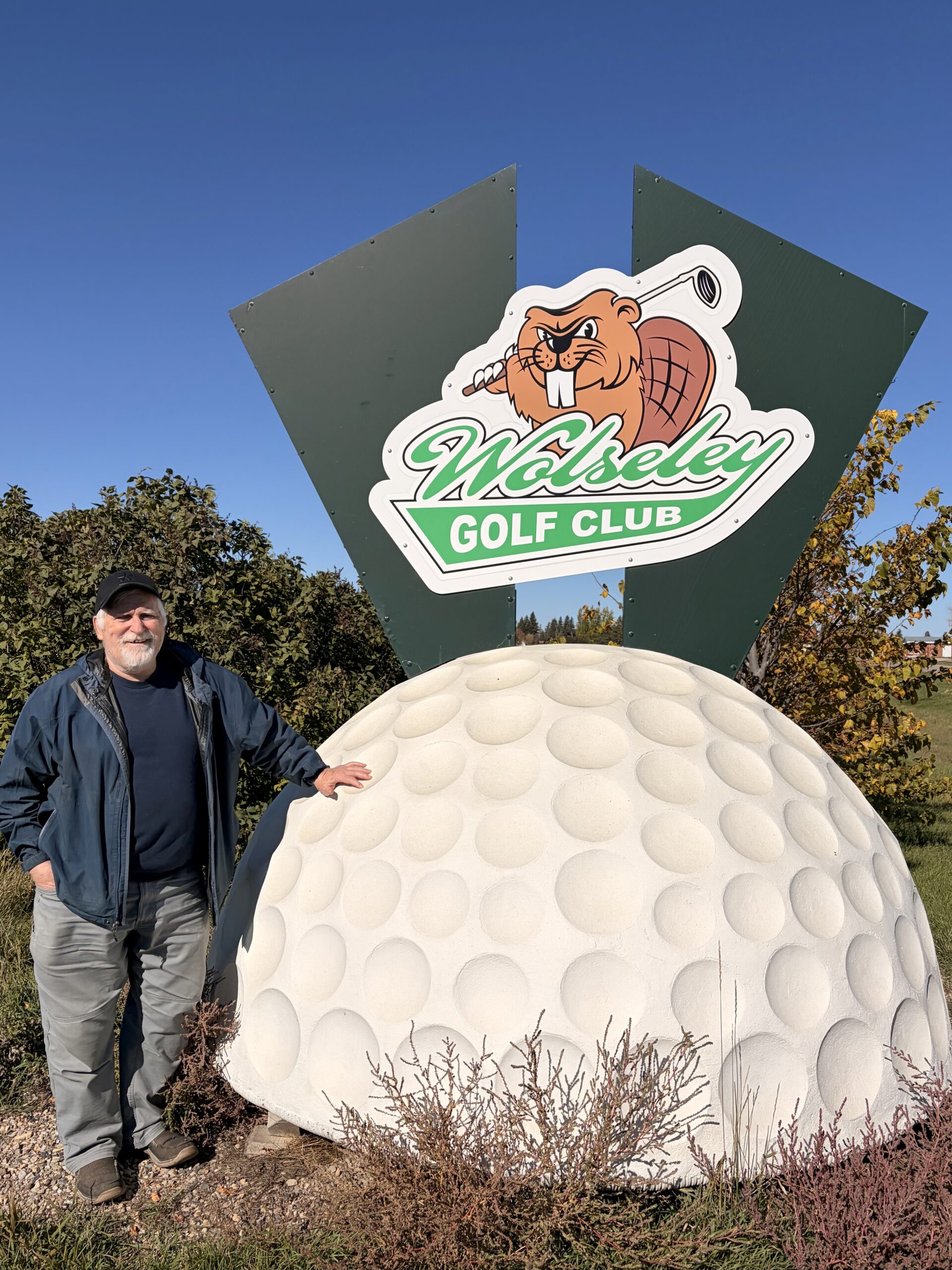
While Marcel Petit is best known as a Canadian photographer and filmmaker, he also works at a youth centre in Saskatoon and is a community activist — although he’s reluctant to use that term.
“I hate the word activist because it makes it sound like I’m important or I do these, these world changing things,” said Petit. “I’m very vocal about everything around me, from homelessness, to poverty, to how we treat each other, to genocides, to even in Regina, having an AI station trying to open up whe we’re losing water around the world.”
Petit has been interested in art since childhood and credited a lot of what drew him to art was Star Wars and books that he read.
“Lord of the Rings, Shakespeare, stuff like that, and Issac Asimov and people like that really kind of opened my eyes to kind of, art and imagination,” said Petit.
The art that Petit makes isn’t just about looking or sounding good, Petit said that it’s about change, telling the truth and being vocal even if it upsets people.
“I’m here to tell a story. I am here to tell stories, I’m here to get things,” said Petit.
In addition to filmmaking and photography which can be seen on his website, Petit is an actor, writer and does theatre. Petit has been a part of numerous projects, but he said that his first project called Hookers is his favourite. It’s documentary telling the story of five family members who lived on the streets and left the streets.
“I still get emails probably four times a year of people watching it for the first time,” said Petit. “I love it, I love knowing that people are still watching it, and I love that people, people are till getting it.”
Merelda Fiddler-Potter is an associate professor at First Nations University and has known Petit since the early 2000s, dating back to her days at CBC. Petit did projects with the art department which is how they first met.
“We started collaborating on projects not long after,” said Fiddler-Potter. “I used to work on documentary films, he has obviously done a lot of documentary work, I’ve worked on projects like that with him.”
Fiddler-Potter said that her and Petit have similar friend groups as well, and she had high praise for his work as an artist and storyteller.
“Marcel is someone who really tries to show the world the way it is,” said Fiddler-Potter.
Mason Elford is a journalism student at the University of Regina who had Petit as a guest lecturer in his investigative journalism class, and like Fiddler-Potter he raved about Petit’s enthusiasm.
“I thought that he was a really passionate guy,” said Elford. “I thought that he um, absolutely loved what has he does.”
Petit mentioned that he isn’t in art to make tons of money, rather it’s doing what he loves, which is something that Elford noted that made an impression on him.
“For him you could really see that, he didn’t seem like someone who really cared if people like his art, if he got money from his art or anything like that occurred,” said Elford.
“He just wanted to make something artistic to express himself and his thoughts and feelings about a certain thing.”
Petit was open about his past struggles, as he spent over a decade in a cloud of alcoholism and addictions. Petit said it wasn’t till he turned 30 that everything changed for him and he started to heal himself.
“I was mean to a lot of people, and I was mean to myself,” said Petit. “It was because I hated myself and I had to figure that out and why did I hate myself.”
Petit credited his past struggles with being able to him with work well with youth. He first started working with youth at Gordon Tootoosis Nikaniwin Theatre in 2003 Saskatoon and has been at Core Neighborhood Youth Co-Op for the past 14 years, which helps youth between ages 16-19 learn life, art and cultural teachings.
“I started working with youth and I just started noticing that I had a way of being able to work with young people and that I wanted to give back,” said Petit.
Featured image: Photo of Marcel Petit. Photo credit: Marcel Petit