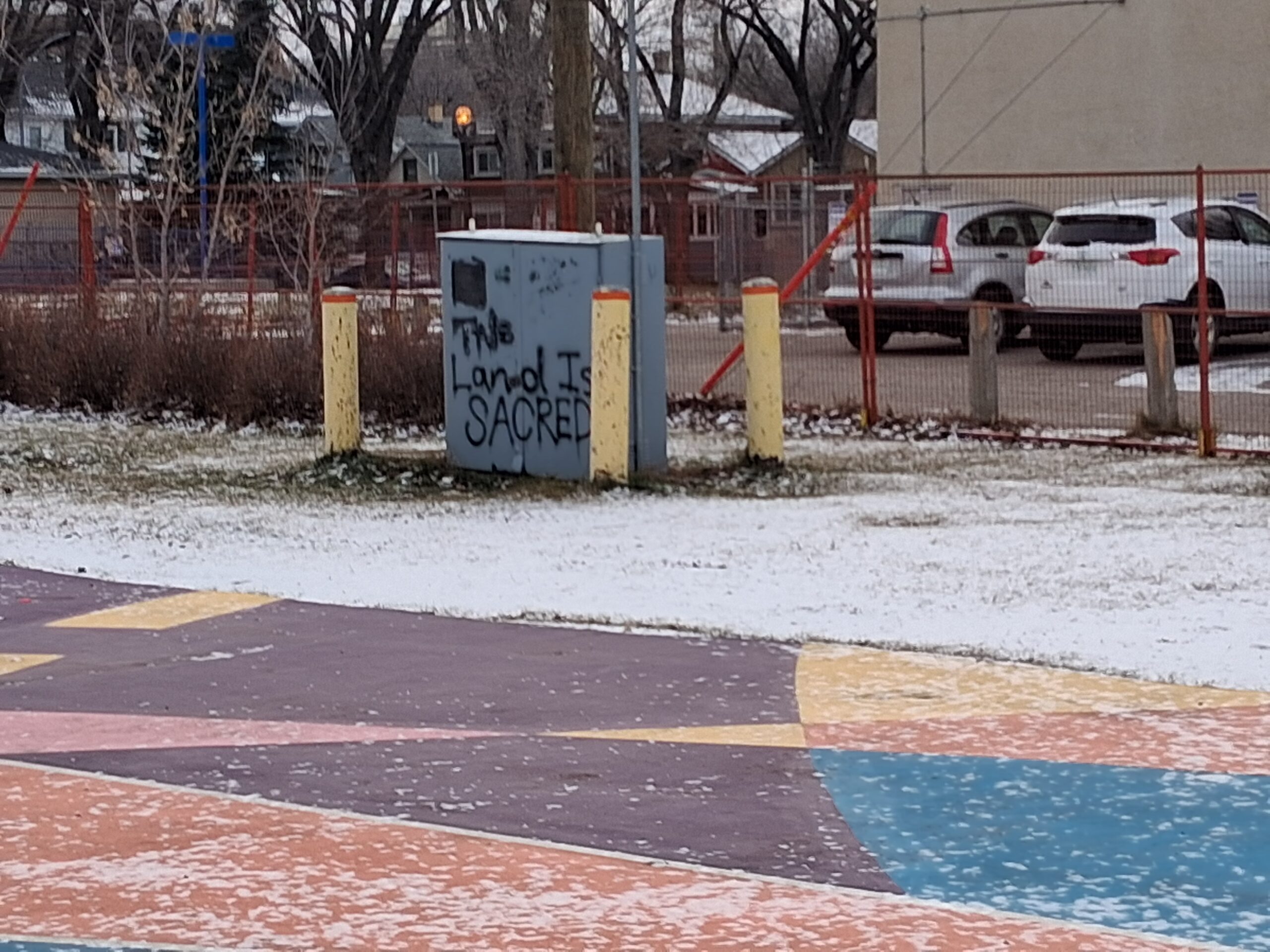
Less than a month after the Core Community Park encampment was dispersed, Regina City Council has delayed discussion on “encampment decommissioning procedures and safer housing alternatives” until January.
During Wednesday’s meeting, council discussed expanding warming shelters but postponed revising housing support and encampment closing procedures, three topics that could affect people displaced from the park.
“I was living there, so I was there from day one,” said community activist Shawn Koch. “For them to delay the talk around that, it’s because they have egg on their face and they don’t have any really good answers.”
Advocates argue housing, not larger shelters, would better serve the affected community.
Mandla Mthembu, a houselessness advocate employed by the Regina Anti-Poverty Ministry, was disappointed by the delay.
“I’m pretty disgusted when we go through another year like this and the response from the city and the provincial government is, you get some funding for warming centres to put people indoors overnight for the coldest nights of the year,” said Mthembu.
“That doesn’t really help people get housed. It doesn’t really help people escape the duress of houselessness.”
Regina Food Bank special advisor David Froh, Ward 3’s city councillor, shared similar thoughts:
“Warming spaces and shelters don’t solve houselessness,” said Froh. “Housing does.”
Following the encampment shutdown on Oct. 27, many occupants were left without a place to stay.
“The provincial government failed in their obligation to support these individuals, and well over 80 of them were left without shelter because they weren’t provided appropriate supports,” said Froh.
“Some people were taken to hotels, and the hotels wouldn’t accept them.”
Some encampment occupants were sent outside of Regina.
“Because there’s not existing shelter space in Regina … this resulted in people being sent out to Moose Jaw, sent out to Emerald Park and White City,” said Mthembu.
“We have stories of people hitchhiking back into town, we have stories of people walking from White City into town.
“All of this mirrors the settler-colonial history of Saskatchewan, and these walks are similar to the Starlight Tours.”
The Starlight Tours were a series of incidents where Saskatoon Police Service officers abandoned Indigenous people far from home in freezing temperatures.
Mthembu said the encampment shutdown has isolated unhoused people in Regina and hindered advocacy efforts.
The encampment was “a bunch of people in the same area, to advocate for the same things,” said Mthembu.
“Now that they’re all fragmented and displaced again … we’re just back to square one, where people are now secluded.”
This isolation also poses safety risks for unhoused people.
“If you’re going to overdose without the park there, you’re going to overdose without volunteers there, maybe without extra Narcan,” said Mthembu.
“If you are assaulted physically or sexually, you don’t have the people there to stand up to protect you, or alert someone, or call emergency services.”
The encampment was dispersed by Regina Fire and Protective Services and Regina Police Services, who cited it as a fire hazard.
“The fire department made the right choice,” said Froh.
“It was unsafe. They took dozens and dozens of propane heaters that people were using in tents. Propane is more dangerous than natural gas. It was an unsafe environment that had to be addressed.”
But Mthembu believes that dispersing encampments only makes fires harder to control.
“When you have a bunch of people living outside, trying to stay warm, fire is always going to be a risk,” said Mthembu.
“There’s the same fire risk as before, except now you have less fire extinguishers. You have less people with cell phones to call fire and emergency services.”