At OK Tire Auto Service, service adviser Silas Lafontaine said that since snow started falling, the south Regina shop is “putting on roughly 24 sets” of winter tires a day.
“Safety is the biggest thing,” Lafontaine said. “It helps decrease stopping distance in winter months.”
A set of four winter tires costs anywhere from “$1,200 for smaller cars to around $2,000 for larger trucks,” Lafontaine said.
While many drivers recognize the safety benefits and accept the cost of buying multiple sets of tires, Saskatchewan motorists are not legally required to use winter tires.
Saskatchewan Government Insurance recommends winter tires for improved traction and control, but said in previous statements to Global News that a provincial winter tire law was not being considered.
Other provinces have winter tire laws. Quebec and B.C. drivers are required to make the switch during the winter months.
Quebec drivers must use winter tires from Dec. 1 to March 15, while B.C. requires winter-rated tires on specific highways from Oct. 1 through April 30.
Despite the lack of a provincial requirement, some University of Regina students say winter tires make a noticeable difference in their daily commutes.
Zachary Zawislak, a third-year history student, commutes to the University of Regina daily for his classes.
Zawislak said he and his family have seen “a notable difference” in traction since switching to winter tires on their vehicles.
“It is safer to have increased traction and tires purposefully made for winter conditions,” Zawislak said.
The benefits of winter tires are also reflected in a report from the Tire and Rubber Association of Canada.
According to its report, 84 per cent of drivers who use winter tires said the tires helped them avoid a potentially dangerous incident on the road, such as losing control or being involved in a collision.
Jake Raczynski, a first-year business administration student, said winter driving conditions can be particularly challenging when travelling to school.
Raczynski described Regina as “particularly hard to drive in” during the winter because of the high winds, which cause drifting snow and lead to dangerous intersections.
He said his winter tires help maintain traction when braking and steering through those conditions.
For drivers, the choice of tires is between all-season, all-weather and winter tires.
All-season tires are designed for year-round use and are made with firm rubber that becomes stiff in colder temperatures, reducing traction on snow and ice.
All-weather tires are also used year-round, but are designed with rubber that stays fairly flexible in colder temperatures.
Winter tires are made with softer rubber that doesn’t freeze easily in cold weather, and have deeper tread patterns, which allow for better control while driving.
The Tire and Rubber Association of Canada’s report also found that 70 per cent of drivers in Saskatchewan and Manitoba use winter tires, with usage increasing by 10 per cent over the past five years.
Across Canada, winter tire use sits at 80 per cent, representing a 45-per-cent increase since 1998.
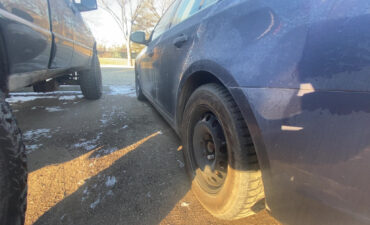
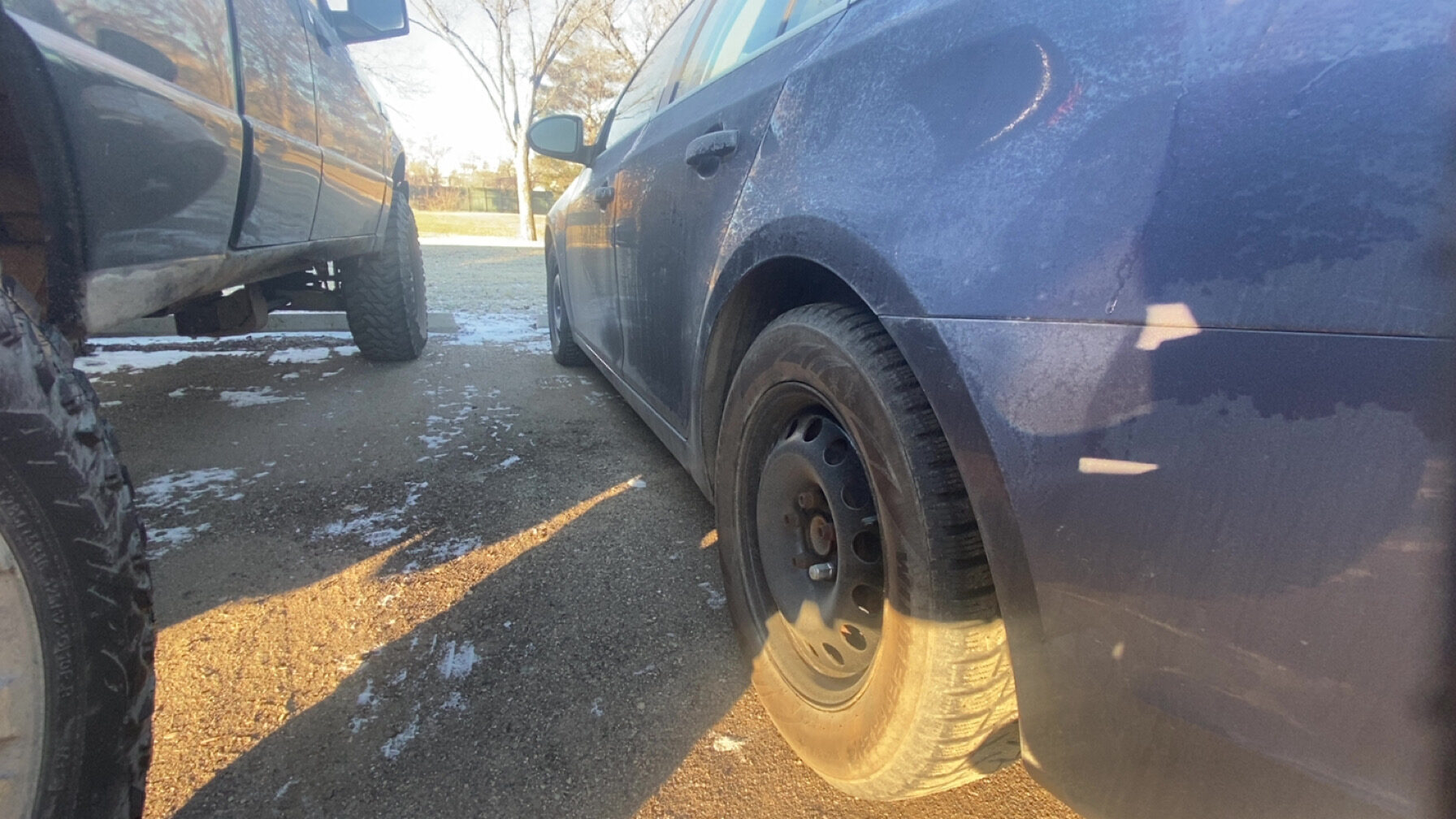
(Feature Photo: Car at the University Of Regina. Photo by Dryden Buchan.)