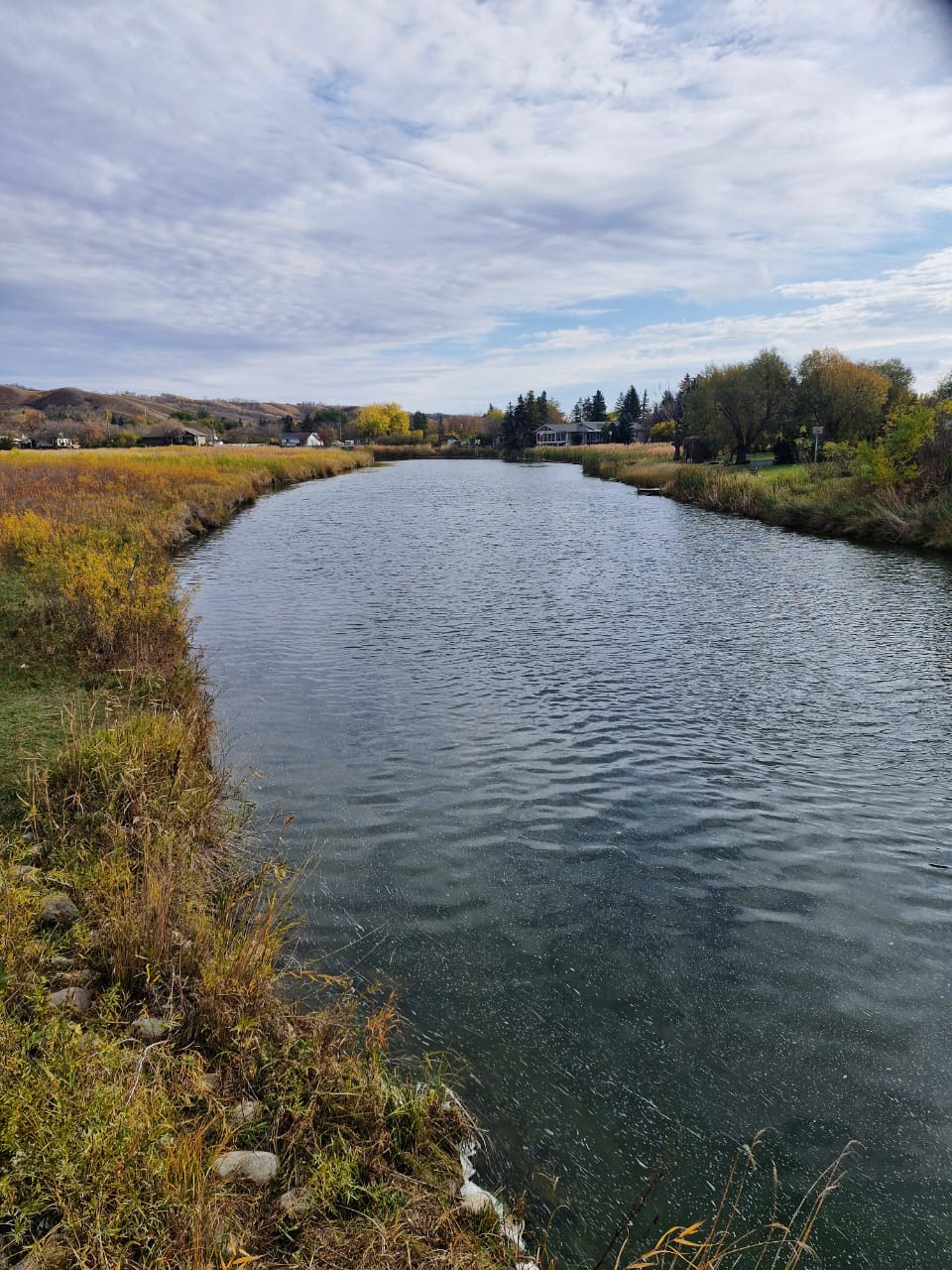
Rod Sedoriuk, Fort Qu’Appelle resident, was walking on Echo Lake Beach when he noticed a “foamy, slimy, kind of brown-ish” substance flowing down the river near the dam. He described it as something that would happen “every so often.”
“Everybody stays off the lake for two, three, four days,” said Sedoriuk, recalling what happens when people see blooms in the lake. Sedoriuk said he does not know where it comes from.
University of Regina professor Dr. Peter Leavitt researches the Qu’Appelle River system’s water quality. He identified the substance as “bloom of cyanobacteria,” a rapid bacteria growth caused by warm weather.
Leavitt said water quality is uncertain throughout Saskatchewan. While Last Mountain Lake has gotten “slightly better,” lakes like Lake Diefenbaker have “terribly gotten worse.”
Kevin Hollerbaum, the founder of Kevin’s Marine, a boat sales and services dealership in Fort Qu’Appelle, has also observed fluctuating water quality of the Qu’Appelle River system in his 34 years of business.

Staining on the boats is one of the more recent happenings Hollerbaum pointed out. He attributed it to alkaline calcium, a deposit caused by high levels of minerals.
“Let the people know,” said Hollerbaum, emphasizing that water bodies should be constantly tested and that information should be disclosed to the public.
Leavitt said water from the rivers has been tested every two weeks for 32 years.
The distribution of information was brought up during Town Council meetings.
Mayor Brian Strong and chief administrative officer Don McLeod said that information is available and that “all [people] gotta do is ask.” McLeod also said that the lakes are “too shallow to be pristine,” attributing some of the circumstances in the lakes to environmental characteristics.
When asked if they would argue that Hollerbaum’s experience with boat staining is a common cycle in nature, McLeod said “I can’t argue that because I don’t know.”
“Spectacular job in misadvertising (…)” said Leavitt, referring specifically to one of the most recently finalized policies by the Water Security Agency. The Agricultural Water Stewardship Policy states that farmers are not to drain wetlands unless the water retention is at least at 40 per cent.
Leavitt said that allowing drainage will have “very damaging effects to water quality.” Water retention makes bacteria grow in the wetlands, which impacts the river system wetlands are drained on.
“The average person probably isn’t aware,” said Leavitt, referring to the policy and the WSA statements. According to him, they are “misrepresenting the numbers.”
Leavitt also encouraged people to inform themselves and take action. “They can contact the MLAs or the premier (…)” said Leavitt.
When asked about how they distribute vital information, the Manager of Communications at the Water Security Agency, Sean Osmar, said the WSA does so by “issuing news releases” and a “mix of social and digital marketing.”
Osmar identified the WSA as responsible for most of the province’s water responsibilities.
When asked about the demand for information from the residents and Professor Leavitt, Osmar said that they are “always working to improve,” but did not specify how.