The Wolseley Town Hall and Opera House has stood as a majestic symbol of optimism for over a century, even after narrowly avoiding demolition four decades ago.
“For the size of our town, it is almost ostentatious. It could have been smaller,” said Wolseley archivist and historian Stephen Scriver.
In the 1980s or ’90s, according to numerous residents, the Town Hall was nearly demolished.
“It was condemned in the early ’80s, and by one vote the council chose to save it from the wrecking ball,” said Wolseley Mayor Gerald Hill. “It was refurbished, this is what you see now, the fruit of that labour.”
The Saskatchewan Heritage Property website says, “The large size of the building underscores the optimism of the pre-World War I boom period and the town’s expectation of significant growth in the future.”
According to Scriver, “There’s a story, which might apocryphal, that Wolseley wanted to be in on the competition to be the capital. Of course, it never came close.
“Some people thought that we’ve got to build a great town hall, and then a great community will evolve around it, and we could be the capital, but it was never in serious contention.”
Scriver said the Town Hall has hosted notable individuals such as Indigenous poet Pauline Johnson, British feminist Emmeline Pankhurst and “probably every premier.”
In recent years, the Town Hall has hosted drag shows. “We’ve had three drag shows, which is something for a small town, quite well attended and well enjoyed by the local people,” said Scriver.
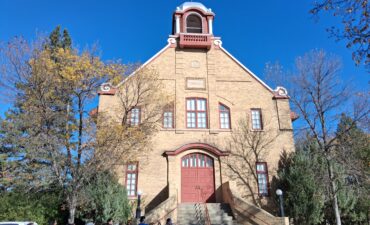
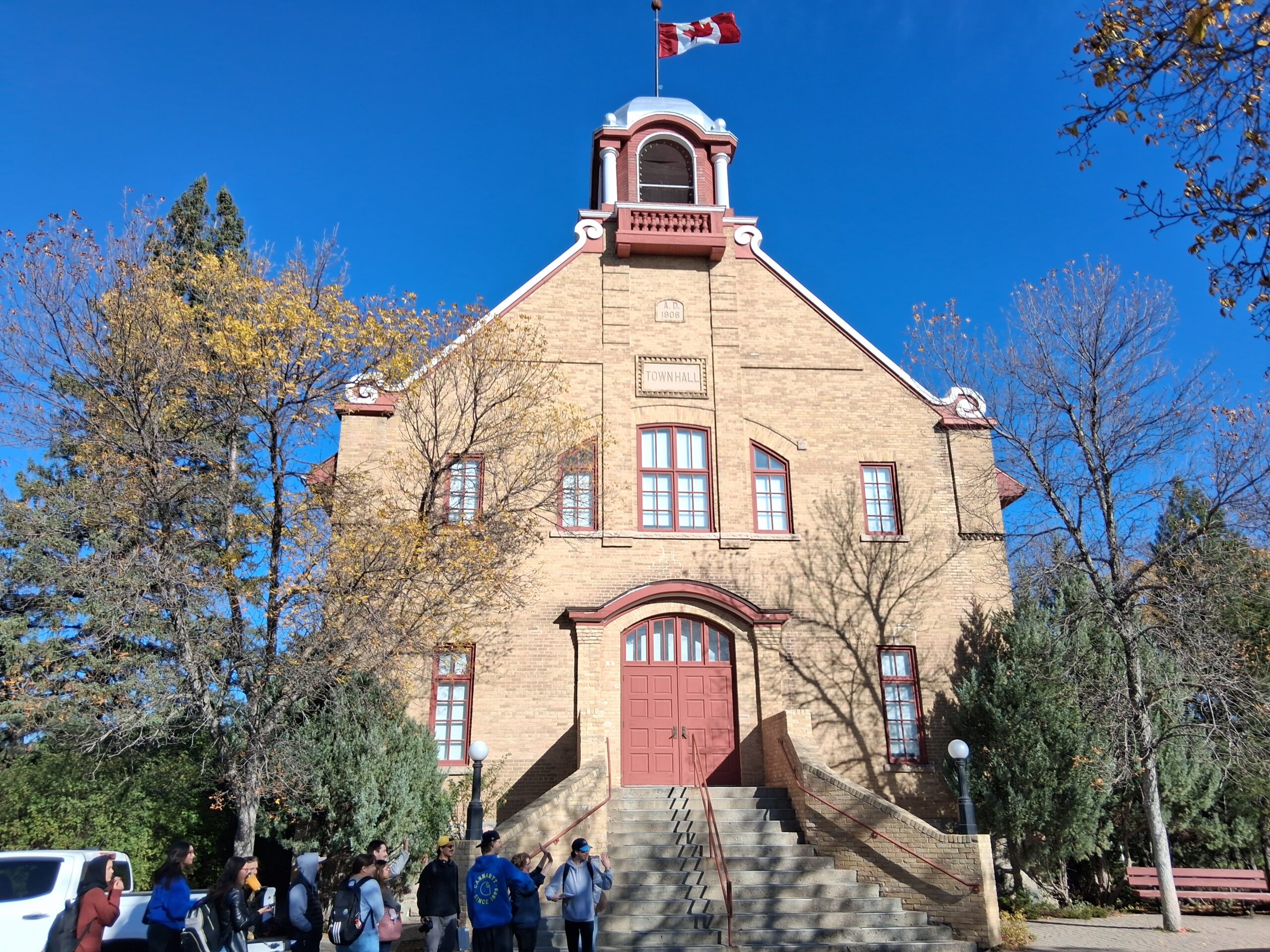
Located at 510 Varennes Street, the Wolseley Town Hall is a multipurpose building that completed construction in 1907. It was designed as a town hall, opera house and, until 1989, a fire hall.
The Town Hall was designed by Manitoban architect John Hamilton Gordon Russell.
The Saskatchewan Heritage Property website describes the Town Hall as having “a church-like style exhibiting the influence of Italian Baroque architecture.”
The building has a large presence, with a staircase leading up to its large front doors. Beside it sits a monument dedicated to soldiers who died in the World Wars.
The auditorium is ornate, with wood floors and a large stage. An interior balcony overlooks the whole room. On the high ceiling are large, decorative light fixtures.
A fire hall sign remains inside the rear entrance. The basement has a large kitchen.
Today, the Town Hall still serves as Wolseley’s cultural centre.
“I guess you could call it a loss leader,” said Scriver. “It costs the town money every year.
“We rent it out. We try to make it a wedding destination, things like that, but generally we lose money on it, because we love to have it and people are impressed by it.”
Dillon Neuls, a Wolseley resident, chose to host his wedding at the Town Hall.
“It’s a beautiful place,” said Neuls. “It’s one of those buildings where it doesn’t really need much decorating done to it.”
Hill agrees; “It’s one of our crown jewels.”